Camp Opticon NYC 2026 brought customers, partners, and Optimizely teams together in New York City for a closer look at where digital experience is heading. Sagepath Reply attended as an official event sponsor, meeting with clients, connecting with the Optimizely ecosystem, and sharing our own perspective on practical AI adoption.
The clearest signal from this year's event: Optimizely has moved past the idea of "having AI agents." The conversation is now about AI as part of the operating model, how teams work, how experiences get assembled and optimized, and how websites increasingly need to serve both people and AI systems.
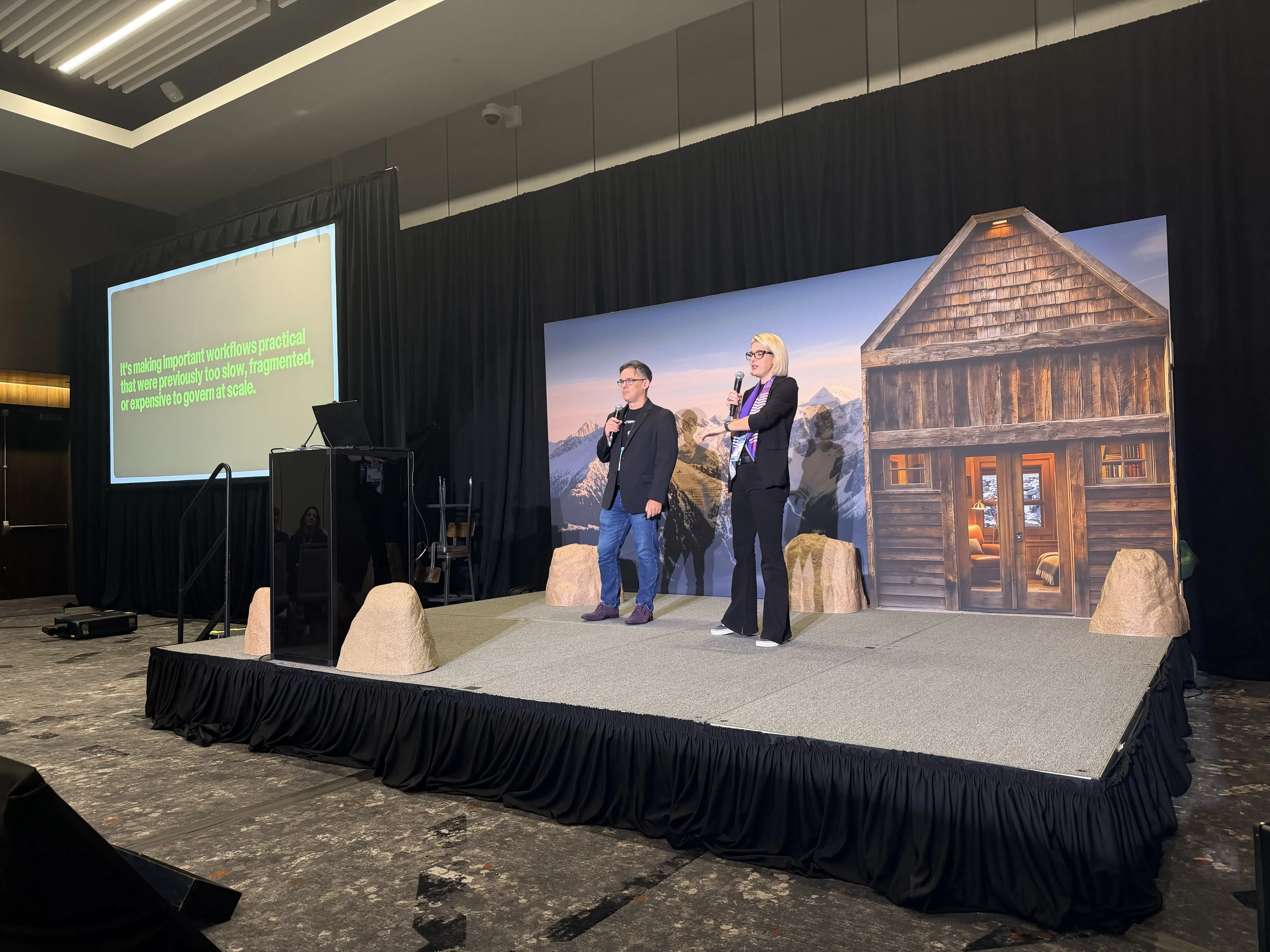
Sagepath CTO, Mike Vallotton, and Head of CX & Content, Ali Mansfield, presenting at Opticon
Opal is becoming MARK
The biggest announcement of the year? Optimizely's strategy is shifting towards Agentic Marketing, which focuses on using AI-powered virtual teammates to automate and optimize marketing operations. At the heart of this strategy is MARK, Optimizely's agent platform, formerly known as Opal.
The conversation at Opticon was no longer about "having AI agents" but about AI as part of the operating model, how teams work, how experiences get assembled and optimized, and how websites increasingly need to serve both people and AI systems. Optimizely's MARK platform is at the forefront of this shift, enabling teams to create AI-powered virtual teammates that can work proactively and support cross-organization collaboration.
Mark-IQ, the context layer, uses organizational data to give agents what they need to take better actions. All augmented by Marketing Models, a family of post-trained models designed to balance quality and cost depending on the task.
Optimizely also announced Mark-Bench, an open-source AI benchmark built specifically to evaluate artificial intelligence performance and cost efficiency on marketing tasks. Fully open-sourced, it covers 285+ tasks, 15 functions, and 6,523 criteria and provides an objective, standardized way for researchers and marketers to test models outside of generic productivity benchmarks.
AI is moving from tools to teammates
Optimizely organized the event around three areas: Marketer Experience, Customer Experience, and Agent Experience. That takeaway: this isn't a collection of AI capabilities bolted onto an existing product. It's a more connected vision for how work gets done.
The clearest example in the Marketer Experience track was Virtual Teammates, digital coworkers with specialized expertise that work proactively, support cross-organization collaboration, and operate with governed identities, permissions, and human-in-the-loop controls. Not another chatbot. Not another content generator. AI shaped around responsibilities and outcomes that look much more like roles inside a team.
That shift changes the question from "What prompt should I write?" to "What work should this system own, and how should people govern it?"
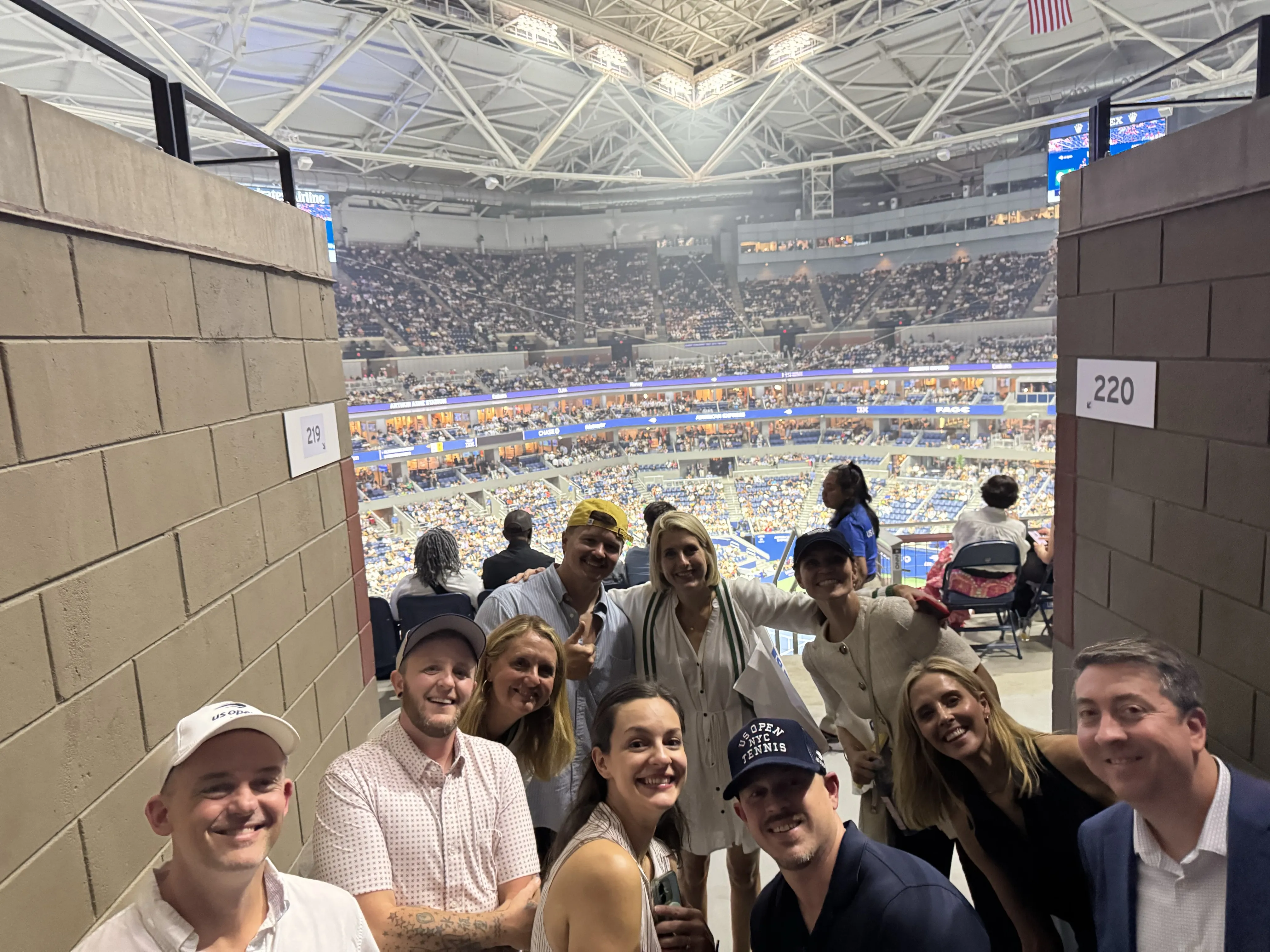
Sagepath embracing ’Team spirit’ with a visit to the US Open after conference sessions
Customer experience is becoming dynamic and autonomous
Optimizely’s Customer Experience approach supports this connected philosophy. Rather than treating personalization, optimization, and content creation as separate functions, Optimizely showed them operating as an integrated system.
Limitless 1:1 Personalization: tailor-made pages for every account, persona, and buyer. Agent-built end-to-end, researched, on-brand, published in a single workflow.
Dynamic Experiences: experiences assembled on the fly based on individual context and behavior, with no pre-built audiences, journeys, or variations to maintain. The guiding principle: the best page on your website may not exist yet because it gets composed in the moment.
Autonomous Optimization: self-improving experiences that test, learn, and adapt on their own, guided by business goals and guardrails, including agents that draft variations, run checks, and roll out winning experiences automatically.
Taken together, this points toward continuous assembly and optimization replacing static page management.
Websites now have two audiences: humans and agents
One of the most forward-looking storylines at Opticon was Agent Experience. The idea is straightforward: websites are no longer built only for human visitors. They also need to be discoverable, interpretable, and eventually actionable for AI systems.
Optimizely positioned itself as an end-to-end AEO platform with AEO Analytics to track how brands perform in LLMs and AI visits, AEO Agents to analyze and implement changes automatically, and WebMCP as a path to making sites agent-action ready.
For brands, this goes beyond traditional SEO. Content structure, consistency, governance, and machine readability are all becoming factors in how a brand gets found and represented.
From fear to framework in regulated marketing
We weren't only there to listen. Mike Vallotton and Ali Mansfield presented Making AI Practical for Regulated Marketing: A governed framework for banking & healthcare marketing teams.
The problem it addressed is familiar to anyone in regulated industries: every new page, campaign, variant, and asset is another thing that must be updated when an approved fact changes. One missed update, due to human oversight, can create legal, compliance, and safety risk.
Our framework isn't just "use AI." It's designing workflows that give AI appropriate, bounded tasks while relying on authoritative context, validation, and human judgment where reliability matters. Seven stages: trigger, discover, ground, draft, validate, approve, publish.
The principle: "The source establishes. Opal assists. The human decides."
Our message was in line with the broader conference theme. Generating output is no longer the hard part. Building governed processes that keep content accurate, explainable, and operationally useful at scale, that's where the work is.
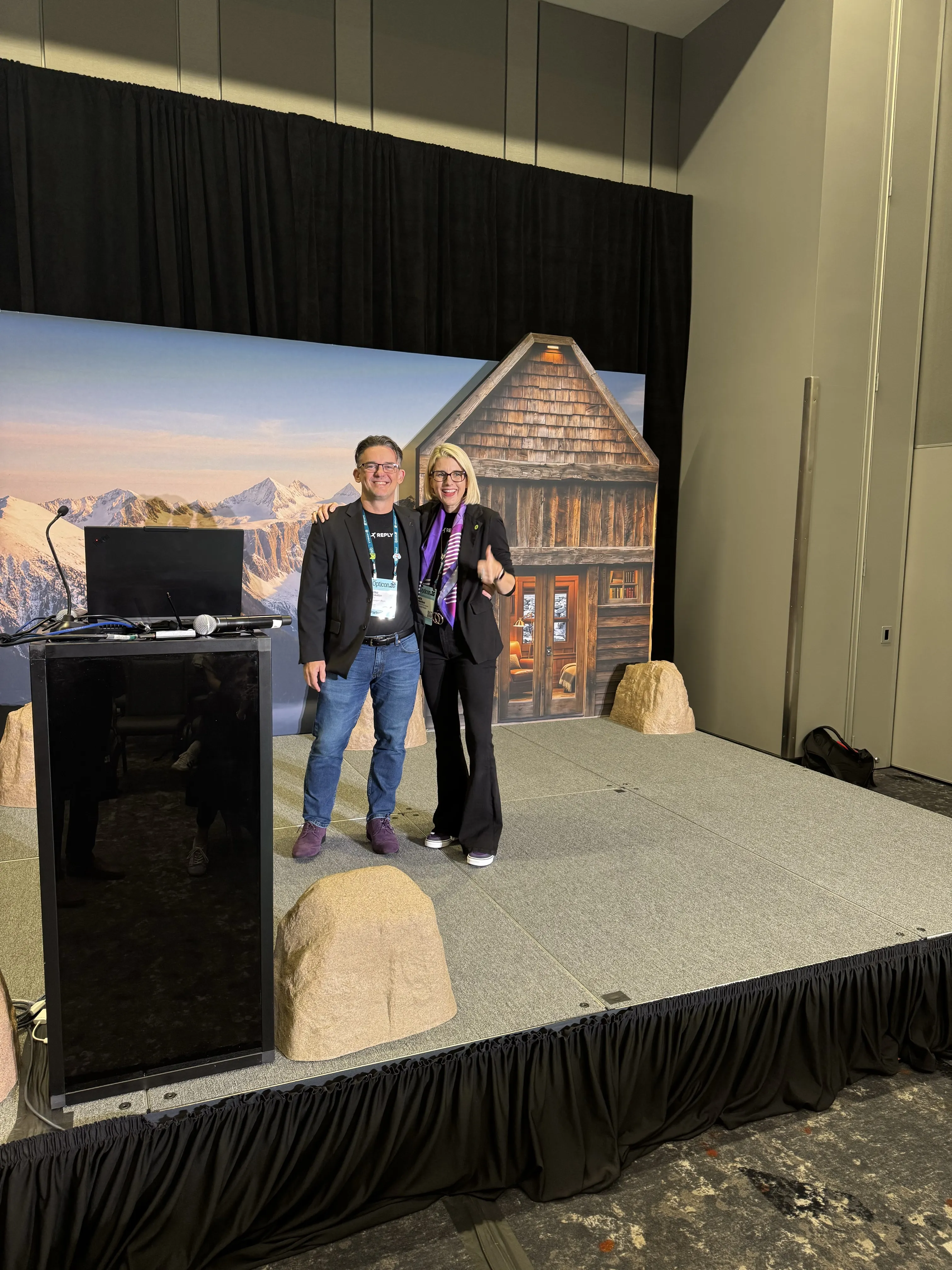
Ali Mansfield and Mike Vallotton celebrate a successful presentation: From Fear To Framework
The Sagepath Reply perspective
While Opticon focused on where the platform is heading, we are focused on practical offerings centered on what customers need right now.
The first: agentic workflow design. The greatest opportunity for AI isn't simply producing more content. It's making workflows practical that were previously too slow, fragmented, or expensive to govern at scale. The question we keep bringing back to conversations: don't ask where to use AI. Ask which workflow doesn't scale today.
The second: efficient CMS 13 upgrades. Our approach is built around a structured path to Optimizely CMS 13, a gated runbook, purpose-built tooling, discovery-driven fixed-bid SOW, and a developer-led, agent-assisted process governed at every gate. The accelerator suite, OptiScan, OptiShift, GraphBridge, and OptiScope, is designed to reduce manual effort and classify upgrade complexity before scope is committed.
Sagepath Reply is one of 11 global Optimizely partners selected for Project Greenlight, a curated group of strategy and implementation experts hand-picked to help customers upgrade to CMS 13 and harness the capabilities of MARK.
The CMS 13 upgrade isn't just about staying current. The capabilities it unlocks - Visual Builder, Opal AI, Content Graph, Content Manager, a more modern editorial experience - are the same capabilities underlying the agent-assisted workflows and dynamic experiences that were on display throughout the event. Project Greenlight isn't separate from the AI story. It's the groundwork for it.
The third: GEO and AEO-oriented auditing. As sites increasingly serve both humans and agents, organizations need a clearer picture of how their content appears in AI-mediated discovery environments and where structure, consistency, and visibility can be improved. AI training and enablement remained part of those conversations too, especially for teams trying to build repeatable internal capability rather than isolated experiments.
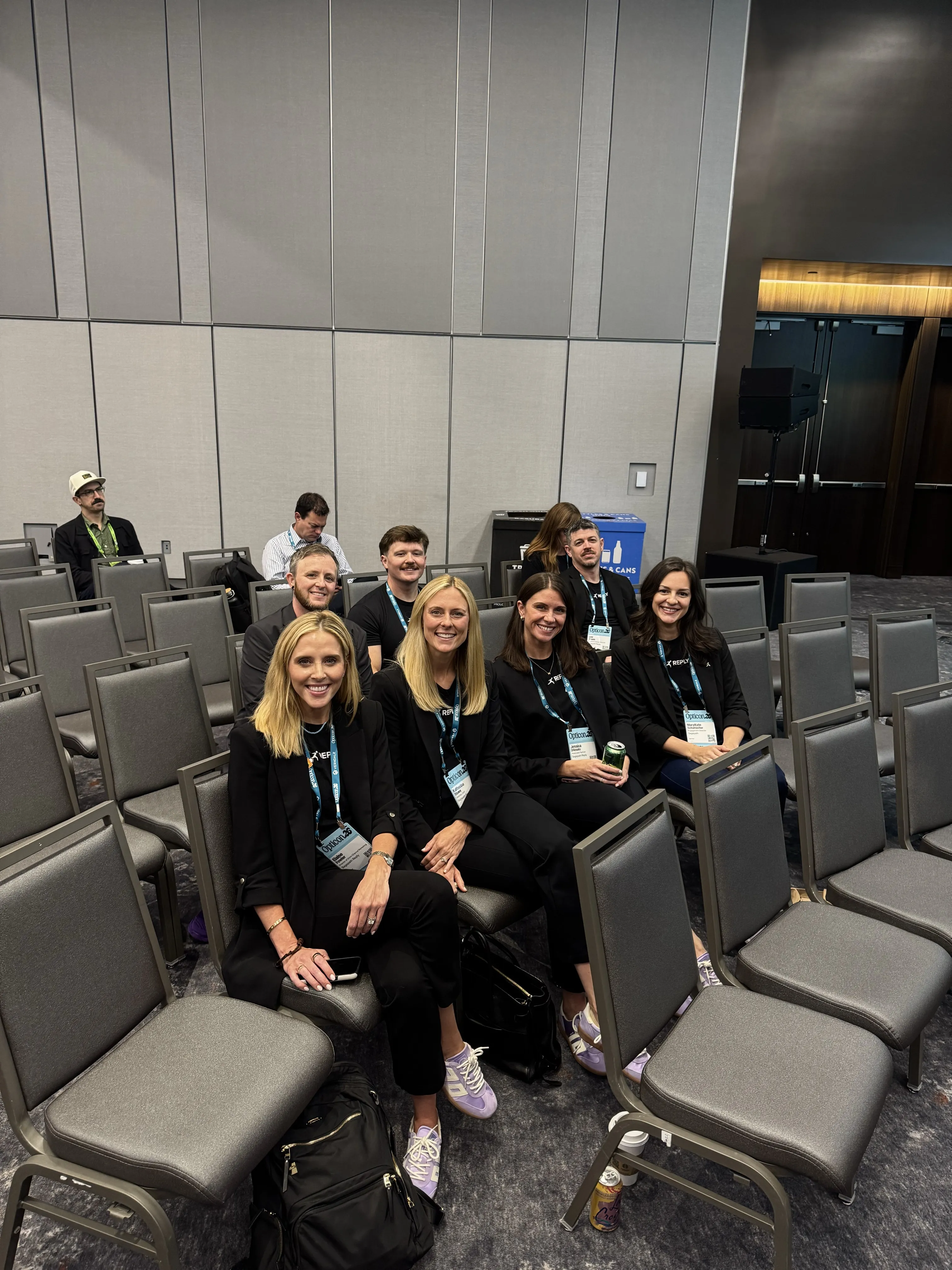
Ready to help you with your Optimizely CMS 13 upgrade
Let’s collaborate
If you were at Opticon, we'd love to compare notes. And if you weren't, we're happy to talk through what these changes mean for your Optimizely roadmap, content operations, CMS 13 modernization path, and readiness for an increasingly agentic digital landscape.